A Thoughtful Strategy

At Enterprise Mobility, we are taking a customer-first approach to navigate and explore strategic solutions to successfully execute electrification across our fleet.
As a global mobility leader, it’s essential to approach electrification thoughtfully, and with a focus on long-term impact and customer experience. This goes beyond simply adding EVs to the fleet. We’re focused on the entire customer journey, including infrastructure planning and power access, education and customer confidence, and ease of use.
A More Fuel-Efficient Fleet.
- Enterprise Mobility offers one of the most fuel-efficient fleets in the car rental industry, with nearly 160,000 hybrids and electric vehicles (EVs) globally.
- In addition to zero tailpipe emissions when driving our EVs, the hybrid models within our daily rental fleet offer an estimated average fuel savings of more than 30%, compared to our fuel-efficient internal combustion engine (ICE) vehicles
Electric Vehicles
Because of our large network and diverse mobility lines, we can have a significant and unique role in building consumer awareness of EVs, or any new vehicle technology, reinforcing a positive experience while customers drive them, and helping to promote long-term market viability. We are well-positioned to build consumer awareness and assist with understanding the technology.
Ultimately, this must be grounded in the needs of the customer; and it’s why we focus on ensuring our customers have an exceptional experience, providing vehicles that suit their varied mobility needs.
Our vast vehicle rental and mobility lines offer an opportunity for market exposure, and our fleet mix continues to evolve with and reflect the broader market. Currently, Enterprise Mobility has thousands of EVs in our global fleet throughout the U.S., Canada and Europe.

Building Confidence
Providing awareness and knowledge among our team members and customers is key in creating confidence and a great experience throughout our rental and mobility services.
- Some of the vehicles in our global company car fleet include EVs and hybrids. This allows our team members the opportunity to experience and provide feedback on the technology, while also helping us to better understand the overall customer experience related to charging, range and our own operational needs.
- Listening to our customers through our industry leading, customer feedback process – which is a proprietary measure that helps us to better understand customer needs and pain points.
- Focused on pairing the right vehicle with each customer by understanding their unique use case, travel requirements, preferences and concerns.
Infrastructure
A primary focus of our strategy is working to ensure the infrastructure within our operations and the broader communities can create a positive customer experience.
In the US and UK, in addition to up-front costs (35% US, 42% UK), the other top deterrent for purchasing an EV is still range anxiety (35% US, 37% UK). Source: Enterprise Mobility On The Move Survey 2025
The Charging Experience
Customer satisfaction with electric vehicles is closely tied to the charging experience, whether en route or at a destination. Unlike personal or B2B fleets, electrification in rental brings unique infrastructure challenges.
At Enterprise Mobility, only about 20% of daily rentals are short-distance; most customers travel more than 90 miles and will need to charge during their trip. That’s why available, reliable, convenient, safe, and efficient public charging options are essential to accelerating broader EV adoption.
Power Access & Access to power increasingly shapes the customer experience and underscores the need for a strong public charging network, not just power for our own operations. As our power needs grow, we view them as part of a broader industrywide shift rather than an isolated trend.
Our goal is to help ensure that our mobility lines, along with the industries and communities we serve, have the energy infrastructure required to operate successfully now and into the future. Right now we are:
- Establishing relationships and collaborating with electric utilities.
- Collaborating to share information with utilities about power needs to support proactive investment that is prudent.
- Trialing new technologies to help provide better clarity into how they strengthen the grid while also improving affordability and reliability of our services to customers

Electrification Activations
We’re working with our partners, clients and customers globally to understand their needs and put electrification programs and pilot efforts into place. This is helping to further enhance broader awareness for us and for our customers, and strengthens future opportunities.
In 2024, Enterprise Mobility, in collaboration with Xcel Energy and with Jacobs, published the results of a joint study — Electrifying Airport Ecosystems — exploring the future electric power needs of U.S. airports and the industries that contribute to their ecosystems.
Using two airports as case studies, Minneapolis-Saint Paul International (MSP) and Denver International (DEN), the study results show there is a narrowing window of opportunity for “no-regrets investment” in the large-scale power infrastructure needed to support electrification. It further underscores the need for collaboration and partnership across industries to implement essential upgrades to airports’ power infrastructure to meet future operational, cargo and passenger needs.
Enterprise Mobility joined a collaboration with vehicle-to-grid (V2G) charging provider, Fermata Energy, and nonprofit community development finance organization, BlueHub Capital®, to provide a resident of affordable housing development at Codman Square, Girls Latin Apartments in Boston, Mass., a low-cost EV rental. The project uses a bidirectional charger — one that can both charge an EV battery and release electricity from the battery — to supply electricity to the utility company when the battery is not needed for driving and the utility company needs extra electricity to meet peak loads. The project concluded in 2025.
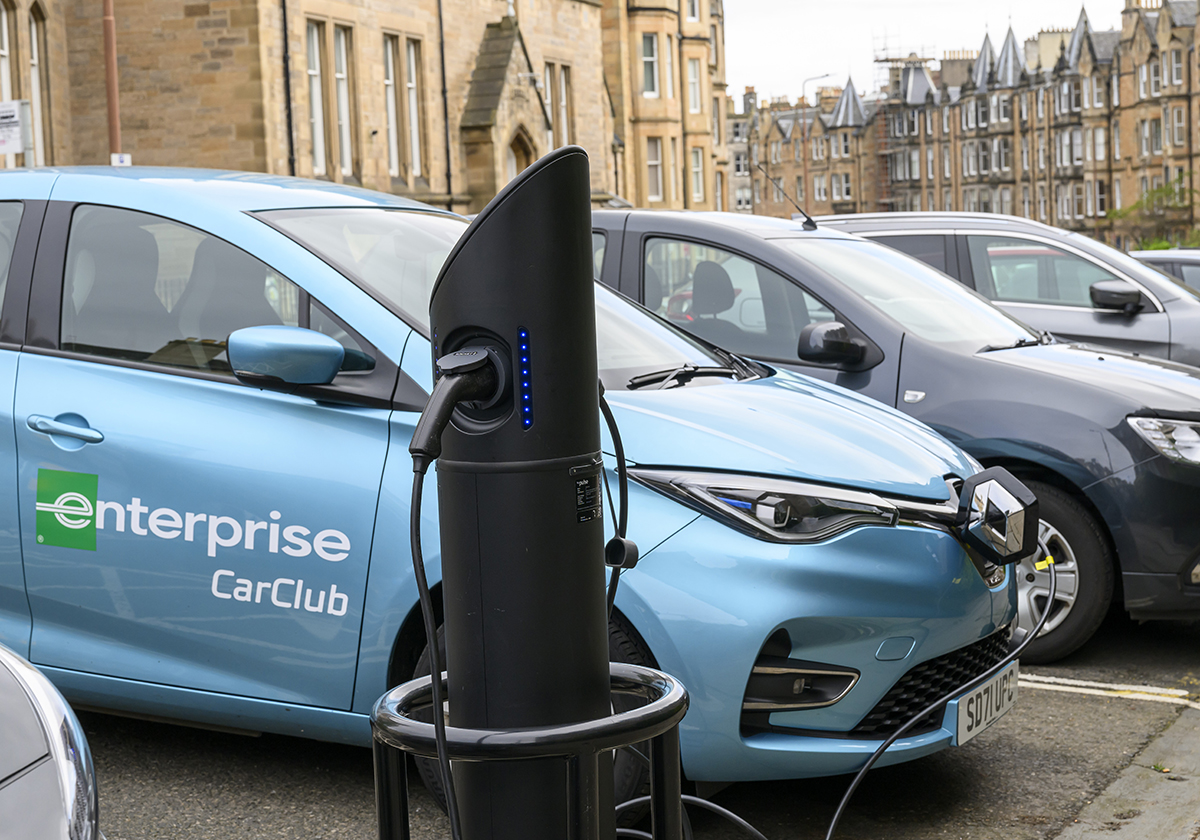
In the U.K., Enterprise Car Club offers members a range of fuel-efficient cars and vans that can be rented by the hour or the day. About 7.5% of the Car Club fleet is made of up of electric vehicles, with more consistently being added. Many of the vehicles are dedicated to local governments or specified business locations, where these employers are saving time and money by replacing their company cars, taxis and mileage reimbursement (grey fleet) with access to self-service EV vehicles. For example, Enterprise Car Club is supporting Edinburgh City Council’s goal of increasing the use of EVs by expanding its fleet in the city.
Enterprise Flex E-Rent partnered with Costain, an infrastructure solutions company, on a pilot effort to test the use of electric vans at Costain’s major project sites. The pilot program trialed EV vans on three major road infrastructure projects across the U.K., with vehicles tested across different teams and workplace scenarios. The pilot is part of Costain's Climate Change Action Plan, which aims to achieve net zero carbon by 2035, including zero emissions from their company car fleet by 2030.
Enterprise Flex-E-Rent offers plug-in electric vans available for daily rental as well as for longer-term flexible rental at 14 Enterprise Flex-E-Rent depots in the South of England and the Midlands. The vehicles available include: Mercedes 55/44 kWh eSprinter vans, which have a range of up to 90 miles on a full charge — depending on the payload — and smaller 35 kWh Mercedes eVito Panel vans, which can be fully recharged in six hours and also have a range of up to 90 miles.
In 2023, as part of our participation in National League of Cities, Enterprise Mobility engaged local governments in Columbia, S.C., Houston and St. Louis to understand how cities can develop equitable electric vehicle policies, programs and charging investment strategies to meet the mobility needs of underserved communities. The result was the Equitable Electric Mobility Playbook — a resource for policymakers and their stakeholders to recognize how an inequitable landscape can impact historically marginalized communities and explore ways to accelerate electric mobility adoption within their own communities.
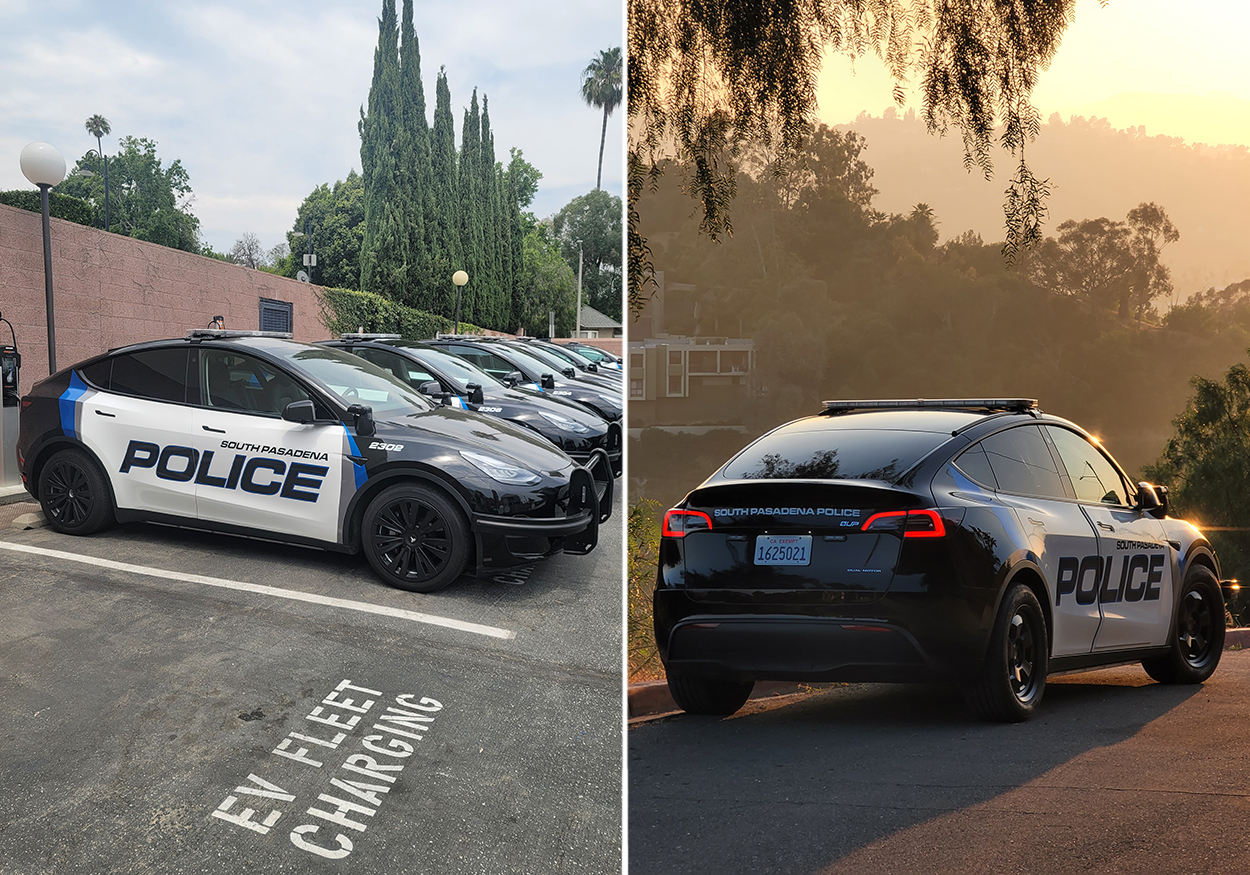
In the summer of 2024, the South Pasadena (Calif.) Police Department became the nation’s first law enforcement agency to completely replace its gasoline-powered vehicles with electric vehicles, with the help of Enterprise Fleet Management. To make the switch, EFM assisted the city in acquiring 10 Tesla Model Ys as patrol vehicles and 10 Tesla Model 3s for detective and administrative duties. The transition is expected to save about $4,000 a year per vehicle on energy costs, plus additional savings on maintenance, such as brakes, oil changes, air filters and more.
In 2022, Enterprise Fleet Management worked with Domino’s Pizza to integrate 100 electric vehicles into their franchise and corporate store fleets, leveraging key strategic partnerships, taking careful steps to ensure operating conditions could work and working to ensure infrastructure support could uphold both employee and customer expectations without compromising success. Today, the program has expanded to 1,100 EVs nationwide, making it the largest electric pizza delivery fleet in the country.
Partners, Collaborations & Investments
Board Member — North America’s largest electric vehicle coalition representing the electric utility sector to support accelerating the necessary power grid investments that enable charging infrastructure at scale
Advisory Board Member — Project funded by U.S. Department of Energy (DOE) Vehicle Technologies Office at Dallas-Fort Worth International Airport (DFW) which aims to help inform recommendations for long-term investments at airports, including future power needs
Limited Partner - Energy Impact Partners (EIP) is investing in a global platform that leverages a proprietary model designed to drive innovation. EIP brings together entrepreneurs and some of the world’s most forward-thinking energy and industrial companies to advance innovation for a better energy future.
Participant — Jointly funded initiative, including the DOE, leading electric companies and more than 500 stakeholders to ready the electric grid in support of the accelerated development of EV charging infrastructure.
Sponsor — Forth is dedicated to increasing equitable access to electric cars, charging and emerging modes through programs, policies and events.
Sponsor — Organization comprised of city, town and village leaders focused on improving the quality of life for their current and future constituents, with more than 2,700 cities across the nation supporting their mission.
Collaboration — Xcel Energy provides the energy that powers millions of homes and businesses across eight Western and Midwestern states. Headquartered in Minneapolis, the company is an industry leader in responsibly reducing carbon emissions and producing and delivering clean energy solutions from a variety of renewable sources at competitive prices.
Electric Vehicle FAQs
Q: How many electric vehicles are in your fleet? What EVs makes/models do you offer for rental, and are they available in certain locations or nationwide?
A: We have thousands of EVs available in our global fleet in select locations throughout the U.S., Canada and Europe. Our fleet mix throughout our mobility lines continues to evolve with the broader market. We buy electric vehicles from different manufactures and continue to work with a number of partners on this as the landscape evolves.
Q: How much does it cost to rent an electric vehicle?
A: Just like all rental vehicles, EV rates are determined by several supply and demand factors including location, dates of travel, length of rental and availability, as well as when the reservation was made. Rates are noted online where EVs are available.
Q: How much does it cost customers to charge their rental electric vehicles?
A: Customers are responsible for paying for their own charging while the vehicle is in their possession. Access to public EV charging varies by market, as does the cost to use the chargers. Some charging stations are free, and others have a higher cost, typically dependent on the charging speed. There are local charging networks that customers can connect with to assist them with finding and paying for charging while driving a rental EV [for example: PlugShare.com]. Customers should consult with their renting location to understand expectations regarding the level of charge at which an EV should be returned and any resulting costs.
Q: Are you all installing charging in your locations?
A: Our goal is to ensure that our mobility businesses, along with the industries and communities we serve, have the energy infrastructure required to operate successfully now and into the future. While we are working with charging companies to help us to facilitate the installation of charging stations throughout select neighborhood and airport operations, our focus more broadly is on collaborating with electric utilities and sharing information with them about power needs we’ve identified through our modeling work for varying levels of EV penetration. This is to support proactive investment to help ensure the ability for future infrastructure to serve our customers.
Q: How can customers reserve an electric vehicle?
A: Customers can check availability and reserve an EV through Enterprise, National or Alamo by going online or calling to make a reservation.
Electrification News